Driving traffic to a website is only one part of digital marketing success. Many businesses invest heavily in search engine optimization, social media marketing, and paid advertising to attract visitors. However, attracting visitors does not guarantee conversions.
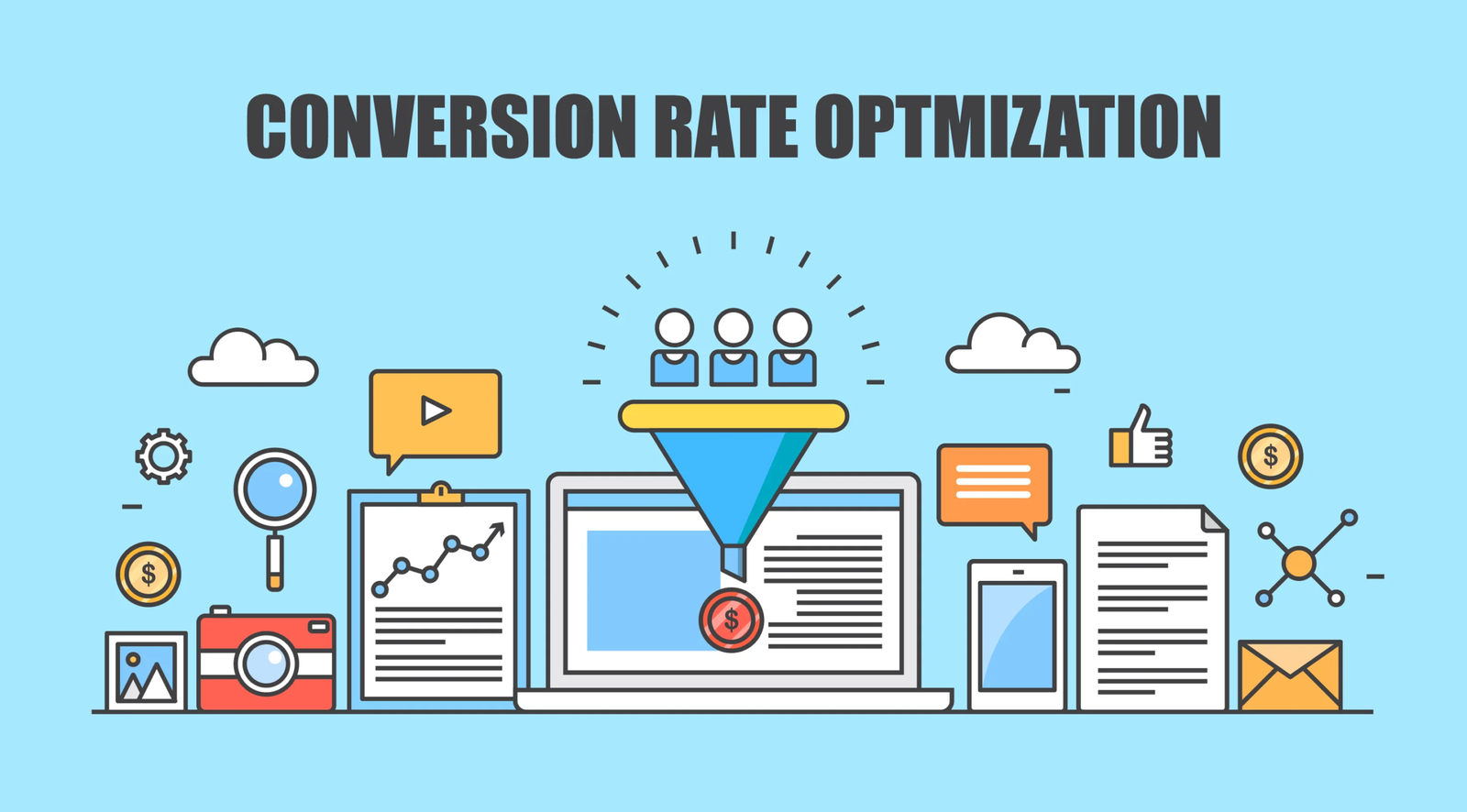
Conversion Rate Optimization (CRO) focuses on improving a website’s ability to turn visitors into leads, subscribers, or customers. Even small improvements in conversion rates can significantly increase revenue without increasing marketing costs.
For example, if a website receives 10,000 visitors per month and converts 1% of them into customers, that results in 100 customers. If the conversion rate improves to 2%, the same traffic can generate 200 customers.
Artificial Intelligence (AI) is helping businesses improve conversion rates by analyzing user behavior, identifying performance issues, and generating optimization ideas.
In this article, we will explore how businesses can use conversion rate optimization strategies and AI tools to turn website visitors into customers.
This article is part of our complete guide:
The AI Digital Marketing Framework: 30 AI Prompts to Build and Scale Your Marketing Strategy.
What Is Conversion Rate Optimization?
Conversion Rate Optimization is the process of improving a website or landing page so that more visitors complete desired actions.
These actions may include:
• purchasing a product
• signing up for an email list
• filling out a contact form
• downloading a resource
• registering for a webinar
The conversion rate is calculated using a simple formula:
Conversion Rate = (Number of Conversions / Total Visitors) × 100
If a page receives 1,000 visitors and 50 users complete the desired action, the conversion rate is 5%.
The goal of CRO is to increase this percentage through strategic improvements.
Understanding User Behavior
Before optimizing a website, businesses must understand how visitors interact with it.
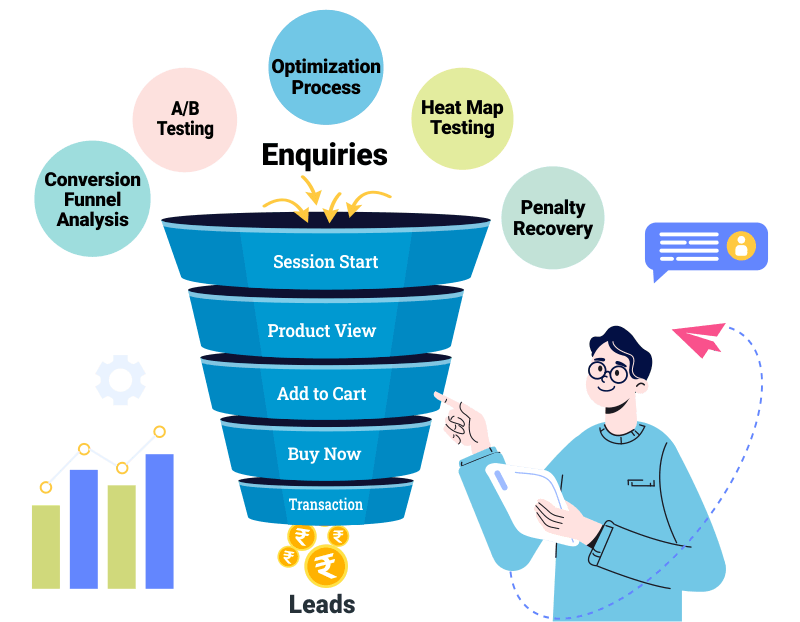
User behavior analysis helps identify areas where visitors experience confusion, friction, or hesitation.
Common methods for analyzing user behavior include:
Heatmaps
Heatmaps visually represent where users click, scroll, or spend the most time on a page.
Session Recordings
These recordings allow marketers to observe how users navigate through a website.
Analytics Data
Website analytics tools provide insights into user behavior such as bounce rate, time on page, and exit points.
Understanding these patterns helps identify areas where improvements can increase conversions.
Key Elements That Influence Conversions
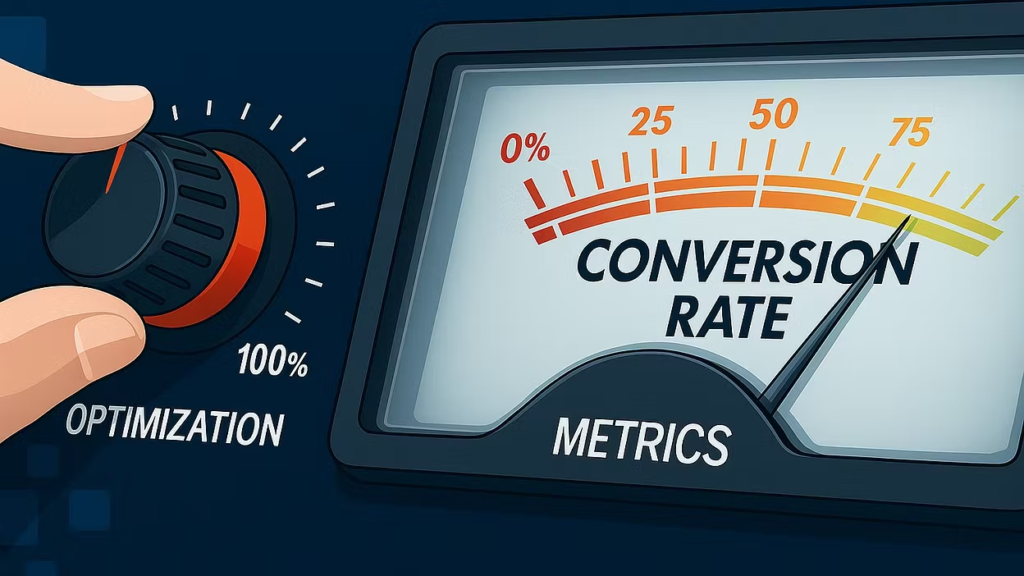
Several website elements have a direct impact on conversion rates.
Optimizing these elements can significantly improve performance.
Clear Value Proposition
Visitors should immediately understand what a business offers and why it is valuable.
A strong headline and subheadline should clearly communicate the main benefit.
Strong Call-to-Action (CTA)
Call-to-action buttons guide users toward the next step.
Examples include:
• Start your free trial
• Download the guide
• Get started today
• Request a demo
Effective CTAs are visible, concise, and action-oriented.
Trust Signals
Visitors are more likely to convert when they trust a brand.
Trust signals may include:
• customer testimonials
• reviews and ratings
• case studies
• security badges
• recognized brand partnerships
Simplified Forms
Long or complicated forms can discourage users from completing sign-ups.
Reducing the number of required fields can improve completion rates.
A/B Testing for Website Optimization
A/B testing is one of the most effective methods for improving conversion rates.

In an A/B test, two variations of a page are shown to different groups of visitors to determine which version performs better.
Common Elements to Test
Headlines
Testing different headlines can reveal which messaging resonates most with visitors.
Call-to-Action Buttons
Different colors, sizes, or wording can affect click-through rates.
Images and Visuals
Visual content can influence user engagement and trust.
Page Layout
Rearranging sections on a page may improve readability and usability.
Testing changes systematically allows businesses to make data-driven improvements.
Reducing Friction in the User Experience
Friction refers to obstacles that make it difficult for users to complete actions on a website.
Common sources of friction include:
• slow page loading speed
• confusing navigation
• unclear messaging
• too many steps in the conversion process
Improving user experience often leads to higher conversion rates.
Simplifying navigation, improving page speed, and making actions easier to complete can significantly increase conversions.
How Artificial Intelligence Supports CRO
AI tools are making conversion optimization more efficient and data-driven.
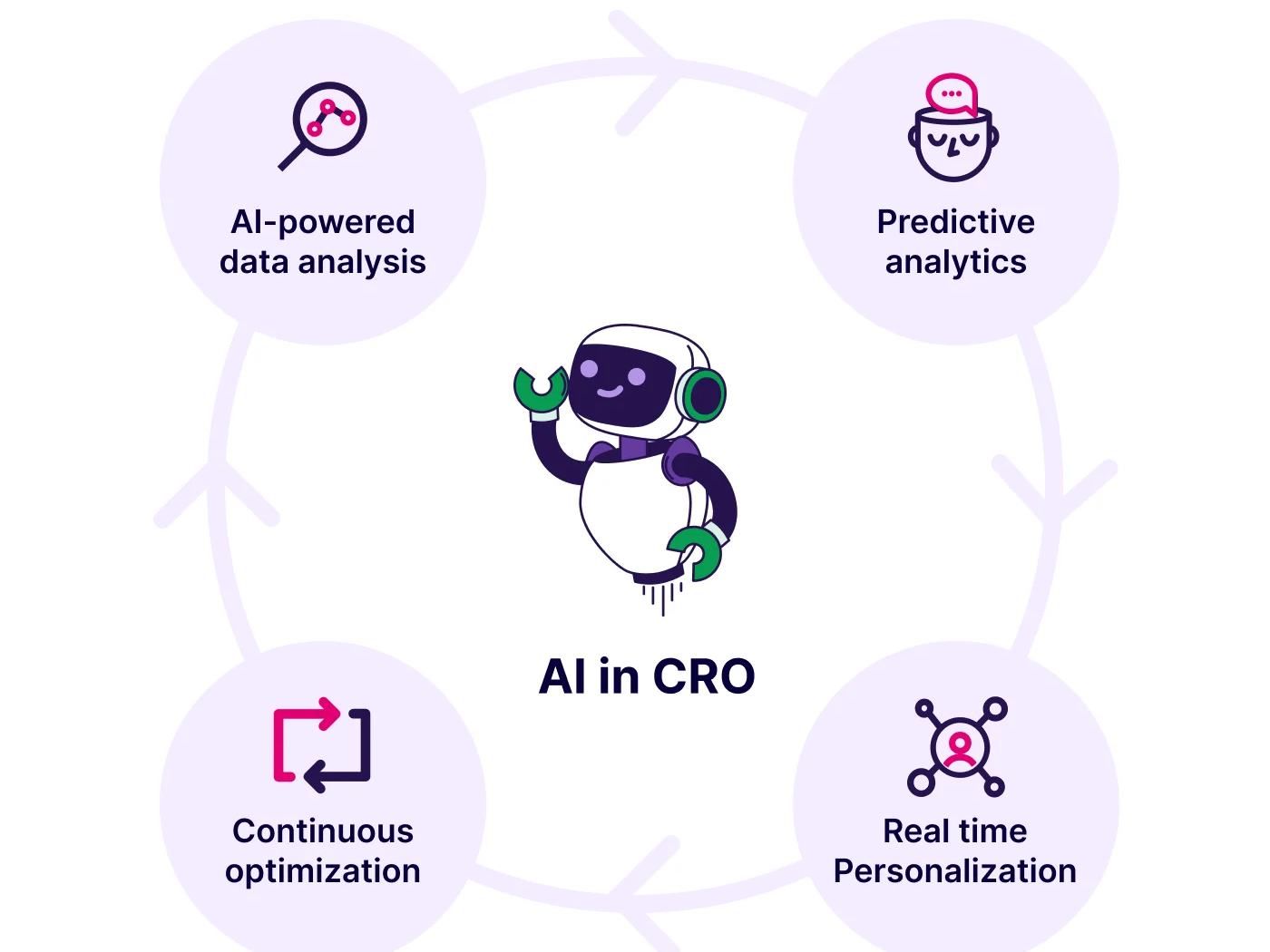
AI Behavior Analysis
AI systems can analyze large volumes of user interaction data and identify patterns that humans may overlook.
AI Copy Optimization
AI writing tools can generate alternative headlines, CTAs, and page copy for testing.
AI Personalization
Some AI platforms personalize website content based on visitor behavior, location, or interests.
AI Testing Recommendations
AI can suggest which elements should be tested first to improve conversion performance.
These capabilities allow marketers to optimize websites more effectively.
AI Prompt for Conversion Rate Optimization
Businesses can use AI prompts to generate CRO improvement strategies.
Example Prompt
“Conduct a conversion rate optimization audit for [website or landing page]. Identify potential conversion bottlenecks, recommend A/B test ideas, suggest improvements for headlines, call-to-action buttons, forms, and trust signals.”
This prompt helps generate structured recommendations for improving website performance.
Best Practices for Conversion Rate Optimization
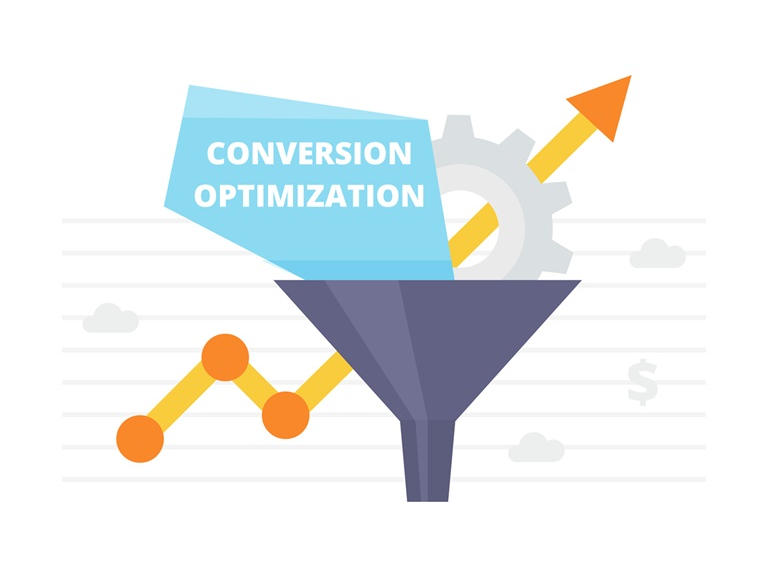
Businesses can improve CRO results by following several key practices.
Focus on user experience
A smooth and intuitive experience encourages visitors to take action.
Test continuously
Optimization is an ongoing process that requires regular experimentation.
Use data-driven decisions
Changes should be based on analytics and testing results rather than assumptions.
Optimize for mobile devices
Many users browse websites on mobile devices, so mobile-friendly design is essential.
Conclusion
Conversion Rate Optimization is one of the most powerful ways to increase the effectiveness of digital marketing campaigns. Instead of focusing only on attracting more traffic, businesses can improve results by optimizing how visitors interact with their websites.
By improving user experience, testing different page elements, and removing obstacles in the conversion process, businesses can significantly increase their conversion rates.
Artificial Intelligence is enhancing CRO by providing deeper insights into user behavior and generating optimization strategies more efficiently.
When businesses combine strategic testing with AI-powered tools, they can transform website traffic into measurable business growth.
Continue Learning
This article is part of the AI Digital Marketing Framework blog series.
To explore the complete system with 30 AI marketing prompts covering branding, strategy, SEO, content marketing, social media, advertising, automation, and analytics, read the full guide below.
Read the Full Guide:
The Complete AI Digital Marketing Framework: 30 AI Prompts to Build and Scale Your Marketing Strategy