
Every successful marketing strategy begins with clear goals. Without defined objectives, businesses often struggle to measure progress, evaluate performance, and make informed decisions about their marketing efforts.
Marketing goals help organizations focus their efforts on outcomes that drive real business growth. These goals may include increasing brand awareness, generating leads, improving customer engagement, or boosting revenue.
However, simply setting goals is not enough. Businesses also need Key Performance Indicators (KPIs) to measure whether those goals are being achieved.
Traditionally, marketers relied on manual data analysis and historical reports to evaluate campaign performance. Today, Artificial Intelligence (AI) is transforming how marketing goals and KPIs are defined, tracked, and optimized.
AI tools can analyze large datasets, identify patterns in customer behavior, and provide predictive insights that help businesses set smarter marketing goals.
In this article, we will explore what marketing goals and KPIs are, why they are important, and how AI can help businesses set data-driven objectives that lead to sustainable growth.
This article is part of our complete guide:
The AI Digital Marketing Framework: 30 AI Prompts to Build and Scale Your Marketing Strategy.
What Are Marketing Goals?
Marketing goals are the outcomes a business aims to achieve through its marketing activities. These goals guide strategy and help teams focus their efforts on meaningful results.
Marketing goals often align with broader business objectives such as increasing revenue, expanding market reach, or improving customer loyalty.
Common marketing goals include:
• Increasing website traffic
• Generating qualified leads
• Growing social media engagement
• Improving conversion rates
• Increasing brand awareness
• Driving sales and revenue
When goals are clearly defined, marketing teams can design campaigns that directly contribute to business success.
What Are KPIs in Marketing?
Key Performance Indicators (KPIs) are measurable metrics used to evaluate whether marketing goals are being achieved.
KPIs provide objective data that helps businesses understand how well their marketing strategies are performing.
Different marketing goals require different KPIs.
For example:
Brand Awareness KPIs
• Website traffic
• Social media reach
• Content impressions
• Search engine visibility
Engagement KPIs
• Social media interactions
• Time spent on website
• Email open rates
• Content shares
Conversion KPIs
• Lead generation
• Sales conversions
• Customer acquisition cost
• Return on advertising spend
By tracking the right KPIs, businesses can measure performance and identify opportunities for improvement.
The Importance of SMART Marketing Goals
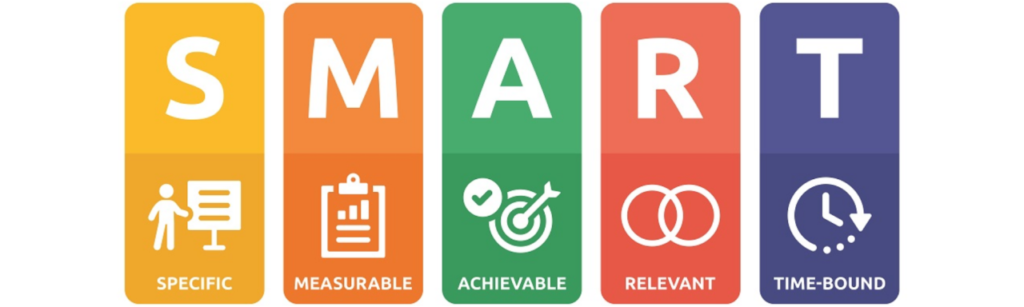
Effective marketing goals should follow the SMART framework, which ensures that objectives are clear and achievable.
SMART stands for:
Specific – The goal should clearly define what needs to be achieved.
Measurable – Progress should be trackable using quantifiable metrics.
Achievable – The goal should be realistic based on available resources.
Relevant – The objective should align with the company’s broader business strategy.
Time-Bound – A timeline should be established for achieving the goal.
For example, instead of setting a vague goal like “increase website traffic,” a SMART goal would be:
Increase website traffic by 40% within six months through SEO and content marketing.
This structured approach helps businesses stay focused and accountable.
How Artificial Intelligence Improves Marketing Goal Setting

Artificial Intelligence is transforming marketing analytics by enabling businesses to analyze large volumes of data quickly and accurately.
AI tools help marketers set better goals by identifying patterns and predicting outcomes.
Data-Driven Insights
AI systems can analyze customer data from websites, social media platforms, and advertising campaigns.
These insights reveal how audiences interact with marketing content and which strategies perform best.
Predictive Analytics
AI can forecast future trends based on historical data.
For example, AI tools may predict seasonal demand patterns or identify customer segments with the highest conversion potential.
This helps businesses set realistic and strategic marketing goals.
Performance Monitoring
AI tools can track campaign performance in real time.
Instead of waiting for monthly reports, marketers can adjust campaigns immediately based on performance insights.
Automated Reporting
AI-powered dashboards can automatically generate marketing performance reports, saving time and providing clear visual insights into campaign results.
Key Marketing Metrics Businesses Should Track
While every business may prioritize different metrics, several marketing KPIs are widely considered essential for digital marketing success.
Website Traffic
Website traffic measures the number of visitors arriving on a website. This metric provides insight into how effectively marketing campaigns attract potential customers.
Conversion Rate
Conversion rate measures the percentage of visitors who complete a desired action, such as signing up for a newsletter or making a purchase.
Higher conversion rates indicate effective messaging and user experience.
Customer Acquisition Cost (CAC)
CAC measures how much it costs to acquire a new customer through marketing and sales efforts.
Reducing acquisition costs improves overall marketing efficiency.
Customer Lifetime Value (CLV)
CLV estimates the total revenue a customer generates during their relationship with the business.
Understanding this value helps companies determine how much they can invest in customer acquisition.
Engagement Metrics
Engagement metrics include likes, comments, shares, and click-through rates on content.
These metrics help evaluate how audiences interact with marketing content.
Example: AI-Driven Marketing Goal Planning
Imagine a company that offers digital marketing training programs.
Using AI analytics tools, the company may discover the following insights:
• Blog content generates significant website traffic
• LinkedIn posts produce the highest engagement rates
• Email campaigns convert leads into customers effectively
Based on these insights, the company might set the following marketing goals:
• Increase website traffic by 50% through SEO and blog content
• Grow LinkedIn audience engagement by 40%
• Improve email marketing conversion rate by 20%
Each goal can then be tracked using relevant KPIs.
AI Prompt for Setting Marketing Goals and KPIs
Businesses can use AI prompts to create structured marketing goals and measurement frameworks.
Prompt
“Set SMART marketing goals for [company name] for the next 6–12 months. Include awareness metrics, engagement metrics, conversion metrics, revenue targets, and recommended tools to track each KPI.”
This prompt helps generate a strategic framework for measuring marketing success.
Tools for Tracking Marketing Performance
Several digital tools help businesses track marketing KPIs effectively.
Common tools include:
• Website analytics platforms
• Social media analytics dashboards
• Email marketing performance trackers
• Advertising campaign analytics tools
• Marketing automation platforms
Many of these platforms now include AI-powered features that provide deeper insights and predictive analysis.
Conclusion
Setting clear marketing goals and tracking the right KPIs are essential for building effective marketing strategies.
Without measurable objectives, businesses may struggle to understand whether their campaigns are truly delivering results.
Artificial Intelligence is helping marketers improve decision-making by analyzing data, identifying trends, and providing predictive insights that guide smarter goal setting.
By combining the SMART framework with AI-powered analytics, businesses can establish realistic goals, monitor performance more accurately, and continuously optimize their marketing strategies.
This data-driven approach allows companies to make informed decisions that support long-term growth and competitive advantage.
Continue Learning
This article is part of our AI Digital Marketing Framework blog series.
To explore the full system with 30 AI marketing prompts covering branding, strategy, SEO, content marketing, social media, advertising, and automation, read the complete guide below.
Read the Full Guide:
The Complete AI Digital Marketing Framework: 30 AI Prompts to Build and Scale Your Marketing Strategy