
A website is often the first place potential customers interact with a brand. Whether someone discovers a company through search engines, social media, or online advertising, the website becomes the central hub where visitors learn about products, services, and brand credibility.
However, simply having a website is not enough. The structure of the website plays a critical role in determining whether visitors stay, explore further, or leave immediately.
A well-organized website structure helps users find information quickly, improves search engine visibility, and guides visitors toward taking meaningful actions such as signing up, contacting the business, or making a purchase.
In the modern digital landscape, businesses are increasingly using Artificial Intelligence (AI) to design and optimize website structures that improve user experience and increase conversions.
In this article, we will explore what website structure is, why it matters for digital marketing success, and how businesses can create a strategic website sitemap that supports both user experience and search engine optimization.
This article is part of our complete guide:
The AI Digital Marketing Framework: 30 AI Prompts to Build and Scale Your Marketing Strategy.
What Is Website Structure?
Website structure refers to the way pages are organized and connected within a website. It determines how information is presented and how users navigate through different sections of the site.
A good website structure ensures that visitors can easily understand the layout of the site and locate the information they need without confusion.
Website structure typically includes:
• The homepage
• Product or service pages
• About page
• Blog or resource section
• Contact page
• Landing pages for campaigns
When these pages are logically organized and clearly connected through navigation menus and internal links, users are more likely to explore the website and engage with the brand.

Why Website Structure Is Important
A well-planned website structure provides several benefits for businesses and their audiences.
Improved User Experience
Visitors should be able to find information quickly and easily. A clear navigation system reduces frustration and encourages users to stay on the site longer.
Better Search Engine Optimization
Search engines analyze website structures to understand how content is organized. A well-structured site makes it easier for search engines to crawl and index pages, which can improve search rankings.
Higher Conversion Rates
When website pages guide users through a logical journey—from learning about a product to taking action—conversion rates tend to increase.
Stronger Brand Credibility
A professional website structure builds trust with visitors. When a site is easy to navigate and provides valuable information, users are more likely to view the brand as credible and reliable.
Key Pages Every Business Website Should Include

Most successful websites include several core pages that provide essential information for visitors.
Homepage
The homepage is usually the first page visitors encounter. It should clearly explain what the business does, who it serves, and what value it offers.
Key elements of a strong homepage include:
• A clear headline and subheadline
• A brief description of products or services
• Customer testimonials or social proof
• Calls-to-action that guide visitors to the next step
About Page
The About page introduces the company, its mission, and its values.
This page helps build trust by explaining the brand story and highlighting the people or expertise behind the business.
Product or Service Pages
These pages provide detailed information about the company’s offerings.
Effective product or service pages include:
• Clear descriptions of benefits
• Visual elements such as images or videos
• Pricing information when applicable
• Calls-to-action encouraging visitors to purchase or inquire
Blog or Resource Section
A blog allows businesses to publish educational content, industry insights, and helpful guides.
Regular blog content improves search engine visibility and helps establish the company as an authority in its industry.
Contact Page
The contact page should make it easy for visitors to connect with the business.
Typical elements include:
• Contact forms
• Email addresses
• Phone numbers
• Social media links
• Physical address if applicable
What Is a Website Sitemap?
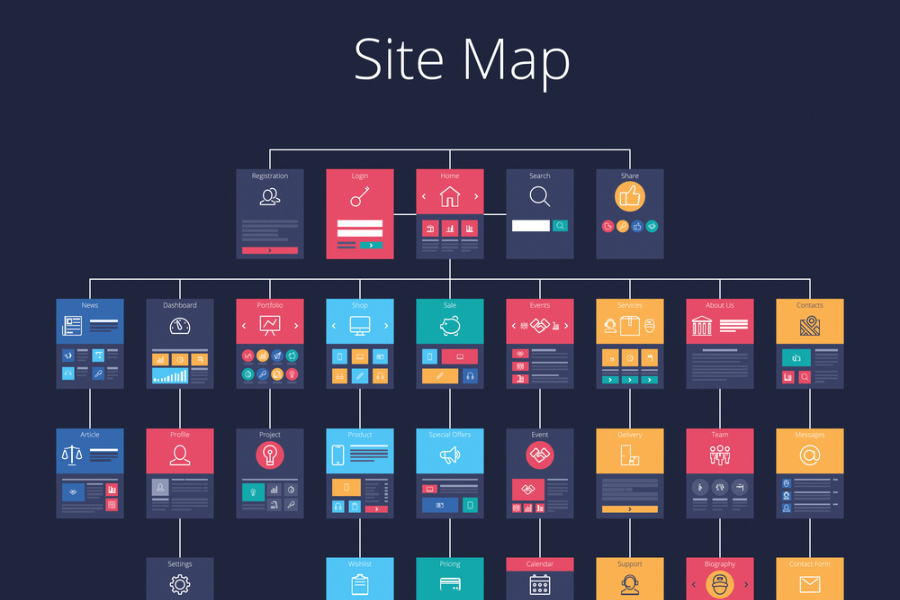
A website sitemap is a structured outline of all the pages on a website and how they connect with one another.
It acts as a blueprint that guides the development of the site.
For example, a simple website sitemap might look like this:
Homepage
→ About
→ Services
→ Blog
→ Contact
Each of these sections may contain additional subpages.
For example:
Services
→ Consulting
→ Training
→ Digital Marketing Services
A well-planned sitemap ensures that information is organized logically and that users can navigate the site efficiently.
How Artificial Intelligence Helps Design Website Structure
Artificial Intelligence is becoming a valuable tool for website planning and optimization.
AI-powered platforms can analyze user behavior, search trends, and content performance to help businesses design better websites.
User Behavior Analysis
AI tools can analyze how visitors interact with websites, identifying where users spend the most time and where they drop off.
These insights help businesses improve navigation and page layout.
Content Organization
AI can recommend how content should be structured based on search engine data and user intent.
This helps ensure that important pages are prioritized within the site architecture.
SEO Optimization
AI tools can analyze keyword opportunities and suggest how pages should be organized to improve search engine rankings.
Conversion Optimization
Some AI platforms can evaluate how users move through a website and recommend design improvements that increase conversions.

AI Prompt for Designing a Website Structure
Businesses can use AI prompts to generate structured website sitemaps.
Prompt
“Design a complete website sitemap for [company name]. Include the homepage structure, service or product pages, about page, blog section, contact page, and any additional pages that would improve user experience and marketing effectiveness. Explain the purpose of each page.”
This prompt helps businesses create a clear and strategic blueprint for building their websites.
Tips for Creating an Effective Website Structure
When designing a website structure, businesses should follow several best practices.
Keep Navigation Simple
Visitors should be able to understand the website layout within seconds. Avoid overly complex navigation menus.
Prioritize Important Pages
Essential pages such as services, products, and contact information should be easy to find.
Use Clear Page Labels
Navigation labels should be simple and descriptive so users immediately understand where each link leads.
Optimize for Mobile Users
Since a large percentage of website traffic comes from mobile devices, navigation and page layouts must be mobile-friendly.
Use Internal Linking
Internal links help connect related content and guide users to additional resources on the site.
They also help search engines understand how pages relate to one another.
Conclusion
A well-designed website structure is the foundation of a successful online presence.
By organizing pages logically and creating a clear navigation system, businesses can improve user experience, strengthen search engine visibility, and guide visitors toward meaningful actions.
Artificial Intelligence is making website planning more effective by providing data-driven insights that help businesses design smarter site architectures.
When businesses combine thoughtful design with AI-powered analysis, they can create websites that not only look professional but also support long-term digital marketing success.
Continue Learning
This article is part of our AI Digital Marketing Framework blog series.
To explore the complete system with 30 AI marketing prompts covering branding, strategy, website development, SEO, content marketing, social media, advertising, and automation, read the full guide below.
Read the Full Guide:
The Complete AI Digital Marketing Framework: 30 AI Prompts to Build and Scale Your Marketing Strategy